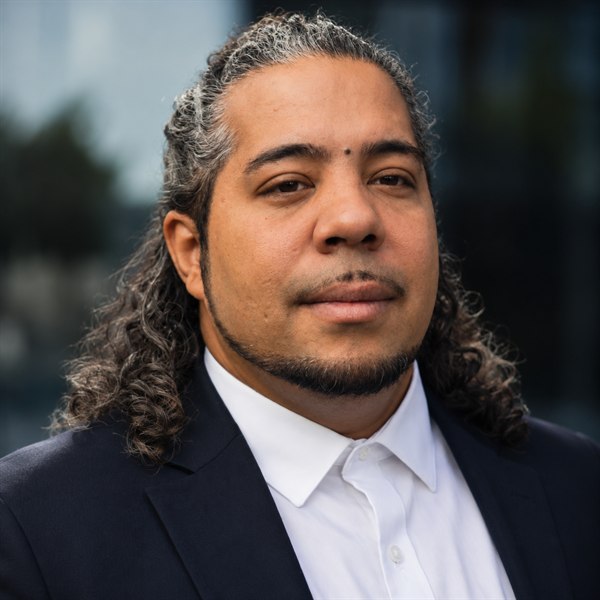
I fix things. The tools just changed.
Fourteen years diagnosing European cars taught me the job before I ever wrote production software: listen to the symptom, find the actual fault, don't sell the customer a part they don't need. Everything I've built since is that same job with different tools.
The shop
I still run Deutsche Auto Sport, a German and European auto specialty operation in Fredericksburg. That matters more than it sounds. When I tell a business owner I know what a missed call costs, it isn't a sales line — my phone rings with the same calls theirs does, usually while I'm under a car with my hands full. Every tool I sell gets run on my own business first. If it doesn't survive contact with a real shop, it doesn't go out.
Why the software
A friend of mine runs an appliance repair company. He was losing jobs the way every small service business loses jobs — the phone rang while he was elbow-deep in a dryer, it went to voicemail, and the customer called the next guy. Nobody was going to build him software for that, so I did. Twelve months later his revenue had gone from $235,568 to $404,888 — not from advertising, from answering the phone.
That's the whole company in one story. I'm not interested in AI as a novelty. I'm interested in the specific, boring, expensive gap between a customer trying to give you money and you being available to take it.
What I won't do
Tasteful AI, not gratuitous. Every AI feature I ship augments the operator or the technician — it drafts the writeup, extracts the structured data, suggests the diagnosis, translates the message — but the human keeps the judgment call. That isn't caution for its own sake; it's why these systems keep customers instead of generating support tickets.
The same principle runs through the engineering: probabilistic workers inside deterministic walls. Models are excellent at proposing and unreliable at stopping, so the limits are code, not vibes. Budgets that halt rather than warn. Checkers that grade output with code, never with another model. Gaps documented publicly instead of quietly patched over.
Why the free tools are free
"If you have an opportunity to accomplish something that will make things better for someone coming behind you, and you don't do that, you are wasting your time on this earth."
— Roberto Clemente
I didn't have a map when I started. I had a repair bay, a laptop, and a lot of nights. So the map goes out for free.
PreFlight gives away security auditing for AI-generated code — no signup, no account, no paid tier, and it runs entirely in your browser so your code never leaves your machine. FlightSchool inside it exists purely to show people what to learn next and why it matters. Atlan is built so that nothing — not a subscription, not an API key — stands between a person and their first build.
The paid work is the custom build. The education isn't for sale. If someone coming up behind me ships something safer because a free tool told them what they didn't know to ask, that's the point.
How I work
Solo, end to end. Backend, frontend, infrastructure, multilingual content, integration, deployment, monitoring, and the customer relationship — no handoffs, no telephone game between the person who heard the problem and the person who fixes it. The portfolio is the evidence: production voice pipelines, multi-tenant SaaS, open-source security tooling, civic tech shipped in eight hours, an engineering cockpit, and public-dataset research where the results that didn't hold up are written down next to the ones that did.
If any of that sounds like what your business needs — start with the free audit. If it sounds like someone you'd want on a team, here's the case for that.